
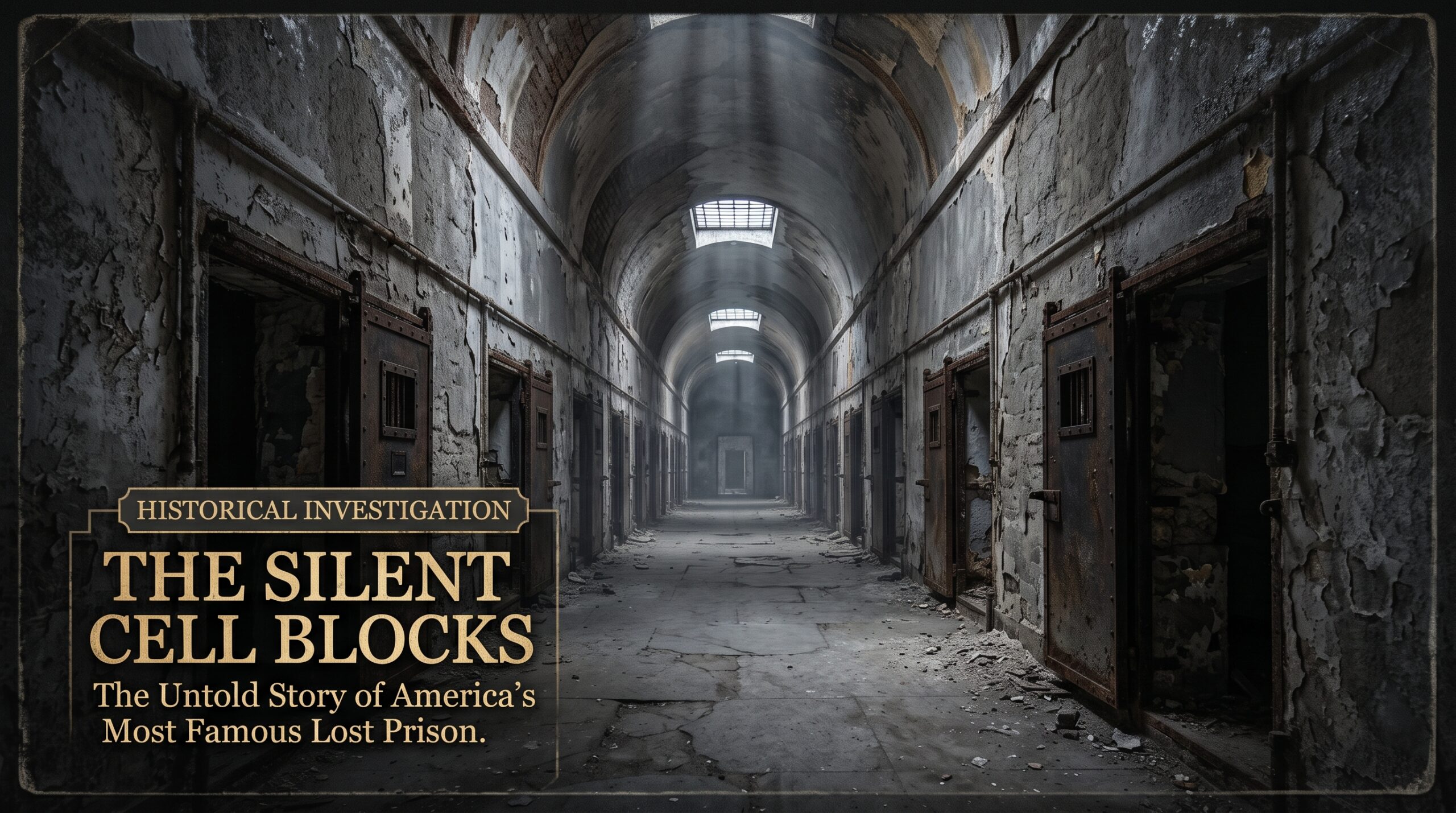
Eastern State Penitentiary: The Dark Haunted History of a Prison
In the heart of Philadelphia, Pennsylvania, stands an enormous stone prison whose abandoned cellblocks and dark corridors have inspired generations of ghost stories. Eastern State Penitentiary is one of America’s most recognizable historic prisons, famous for its unusual architecture, strict prison system, and reported paranormal encounters.
Today, visitors explore its deteriorating walls and empty cells while learning about the institution’s complicated past. Its atmosphere has also made it a popular destination for people interested in haunted places and unexplained experiences. But what is the real history behind this mysterious landmark?
The Beginning of Eastern State Penitentiary
Eastern State Penitentiary opened in 1829. Its design represented a major experiment in prison reform. Instead of keeping prisoners together in crowded rooms, the institution emphasized individual cells and separation.
Reformers believed that solitude, work, and reflection could encourage prisoners to change their behavior. The prison’s radial layout, with cellblocks extending outward from a central hub, allowed staff to monitor several areas from one location.
The building was considered innovative for its time. Its design influenced prisons in other parts of the world, making Eastern State an important chapter in the history of criminal justice.
However, the system of isolation also attracted criticism. Extended solitary confinement could cause severe psychological distress, raising difficult questions about punishment, rehabilitation, and human dignity.
Life Inside the Prison Walls
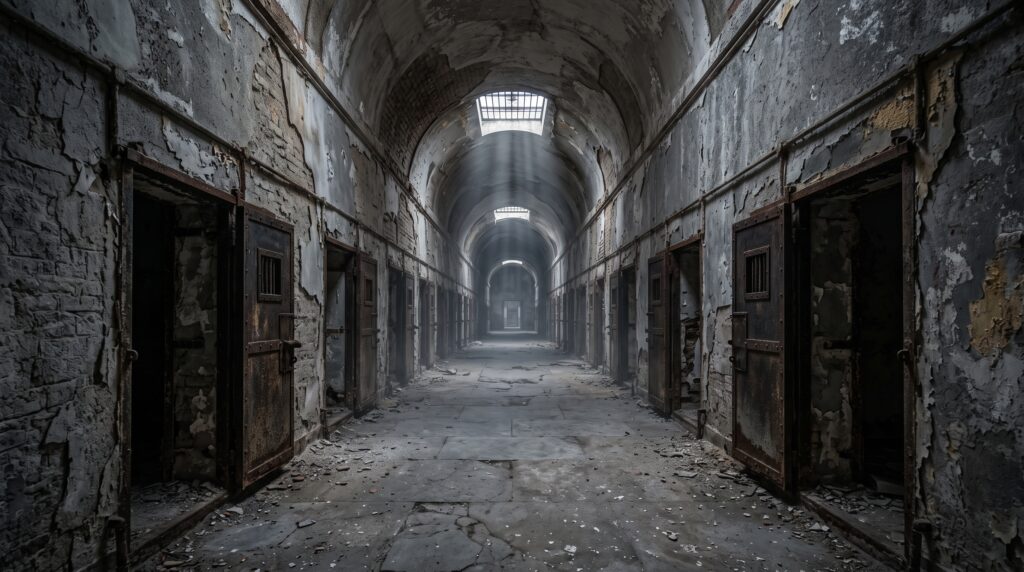
Life at Eastern State Penitentiary was shaped by strict rules and controlled movement. Prisoners spent much of their time in individual cells, where they were expected to work, reflect, and follow the institution’s regulations.
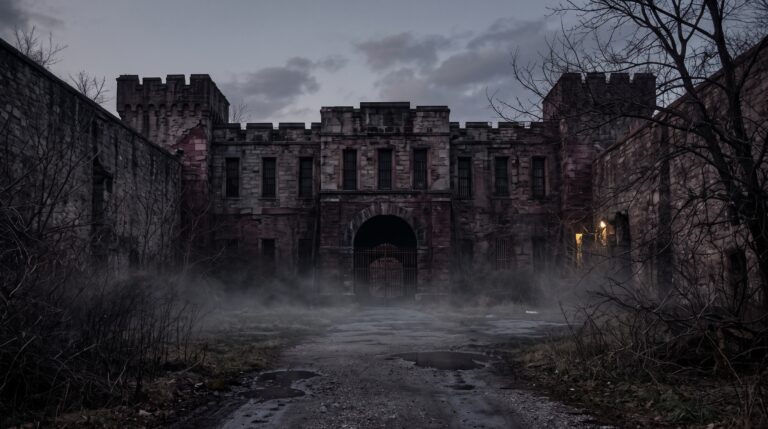
The prison’s architecture reinforced the sense of separation. Thick stone walls, heavy doors, narrow openings, and long corridors created an environment that could feel isolated even during ordinary daytime hours.
Over the decades, the institution changed as prison practices and ideas about rehabilitation evolved. The original system of strict separation became increasingly difficult to maintain, and overcrowding and changing policies altered daily life inside the prison.
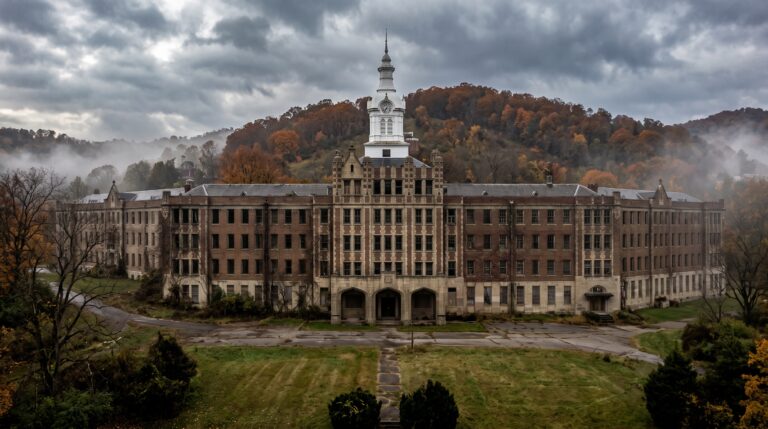
Eastern State eventually closed in 1971, leaving behind a vast complex that would slowly deteriorate before becoming a historic site open to visitors.
Why Is Eastern State Penitentiary Considered Haunted?
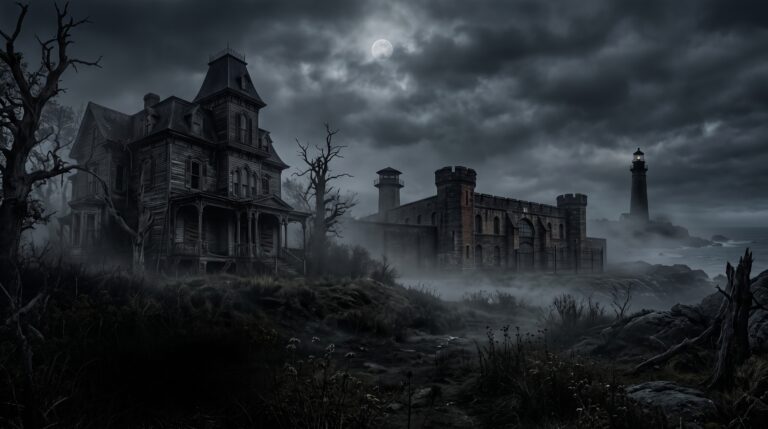
Eastern State Penitentiary’s haunted reputation developed around stories associated with its abandoned cells, shadowy corridors, and troubled past. Visitors and paranormal enthusiasts have reported strange noises, unexplained footsteps, shadow-like figures, and the unsettling feeling that someone is nearby when no one can be seen.
Some popular accounts describe unusual experiences in particular cellblocks. Others focus on the atmosphere of the prison itself, where peeling walls, rusted metal, and patches of darkness make ordinary sounds seem mysterious.
These accounts have helped establish Eastern State as a famous destination for paranormal tourism. The site has also been featured in ghost-hunting programs and Halloween attractions, further connecting it with American haunted-place culture.
However, reported experiences are not proof of paranormal activity. There is no conclusive scientific evidence establishing that the prison is haunted. Sounds may travel strangely through the building, while wind, old materials, lighting, and visitors’ expectations can influence what people believe they have experienced.
The Prison’s Most Famous Inmate
One of the best-known people held at Eastern State was Al Capone, the notorious Chicago gangster. He was imprisoned there in 1929 for carrying a concealed weapon.
Capone’s time at Eastern State has become part of the prison’s popular history. Accounts of his stay often emphasize that his surroundings were reportedly more comfortable than those of many other prisoners, although stories about the details of his cell can sometimes be exaggerated.
His connection to the institution adds another layer to its public image. Yet the history of Eastern State extends far beyond one famous inmate, encompassing generations of prisoners, employees, reformers, and debates about the purpose of incarceration.
Exploring the Ruins Today
Eastern State Penitentiary is now a historic site where visitors can explore preserved sections of the prison and learn about its past through exhibits and guided experiences.
Walking through the cellblocks offers a powerful view of the building’s scale and design. Empty cells, weathered surfaces, and the central hub reveal how the architecture shaped life inside the institution.
The site also encourages visitors to consider the human stories behind the walls. Its history raises questions about prison reform, solitary confinement, public safety, and the long-term effects of isolation.
For people interested in haunted history, the atmosphere can feel unsettling. For history enthusiasts, however, the prison’s greatest significance may lie in what it reveals about changing attitudes toward punishment and rehabilitation.
History, Mystery, and the Stories We Tell
Eastern State Penitentiary remains a powerful symbol of Philadelphia’s past. Its imposing architecture and history of isolation have helped create an environment where ghost stories continue to flourish.
Whether visitors arrive looking for paranormal experiences or historical knowledge, the site offers an opportunity to examine the difference between documented events and legends passed from person to person.
The prison’s reputation may always include mysterious tales, but its real history is compelling enough on its own. Behind every empty cell lies a reminder of the people who lived there and the difficult questions society continues to face about justice, punishment, and human dignity.
Frequently Asked Questions
Where is Eastern State Penitentiary located?
Eastern State Penitentiary is located in Philadelphia, Pennsylvania, in the United States.
When did Eastern State Penitentiary open and close?
The prison opened in 1829 and closed in 1971.
Why is Eastern State Penitentiary famous?
It is known for its innovative radial design, its historical system of prisoner isolation, its connection to Al Capone, and its modern reputation as a haunted historic site.
Is Eastern State Penitentiary really haunted?
The prison has a long history of reported paranormal experiences, but no conclusive scientific evidence proves that ghosts inhabit the building.
Can visitors explore Eastern State Penitentiary?
Yes. The site operates as a historic attraction with exhibits and visitor experiences. Check its official website for current opening hours, tour options, and seasonal events before planning a visit.
Editorial note: Ghost stories in this article are presented as folklore and reported experiences, not verified supernatural events.

One Comment