Trans-Allegheny Lunatic Asylum: The Dark History of a Haunted Institution
The Institution Behind the Legends
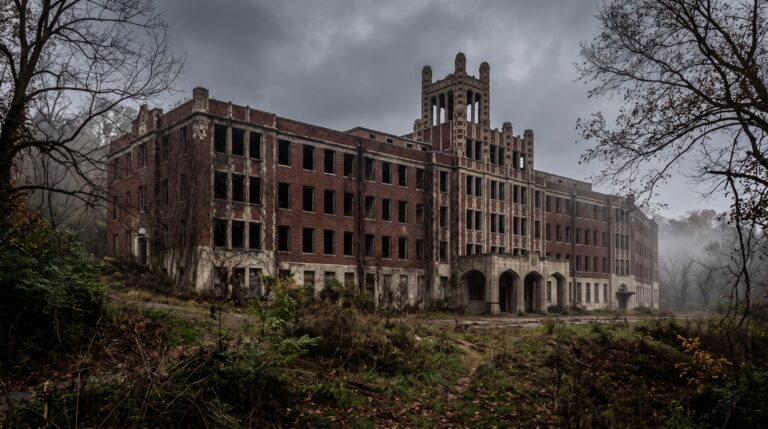
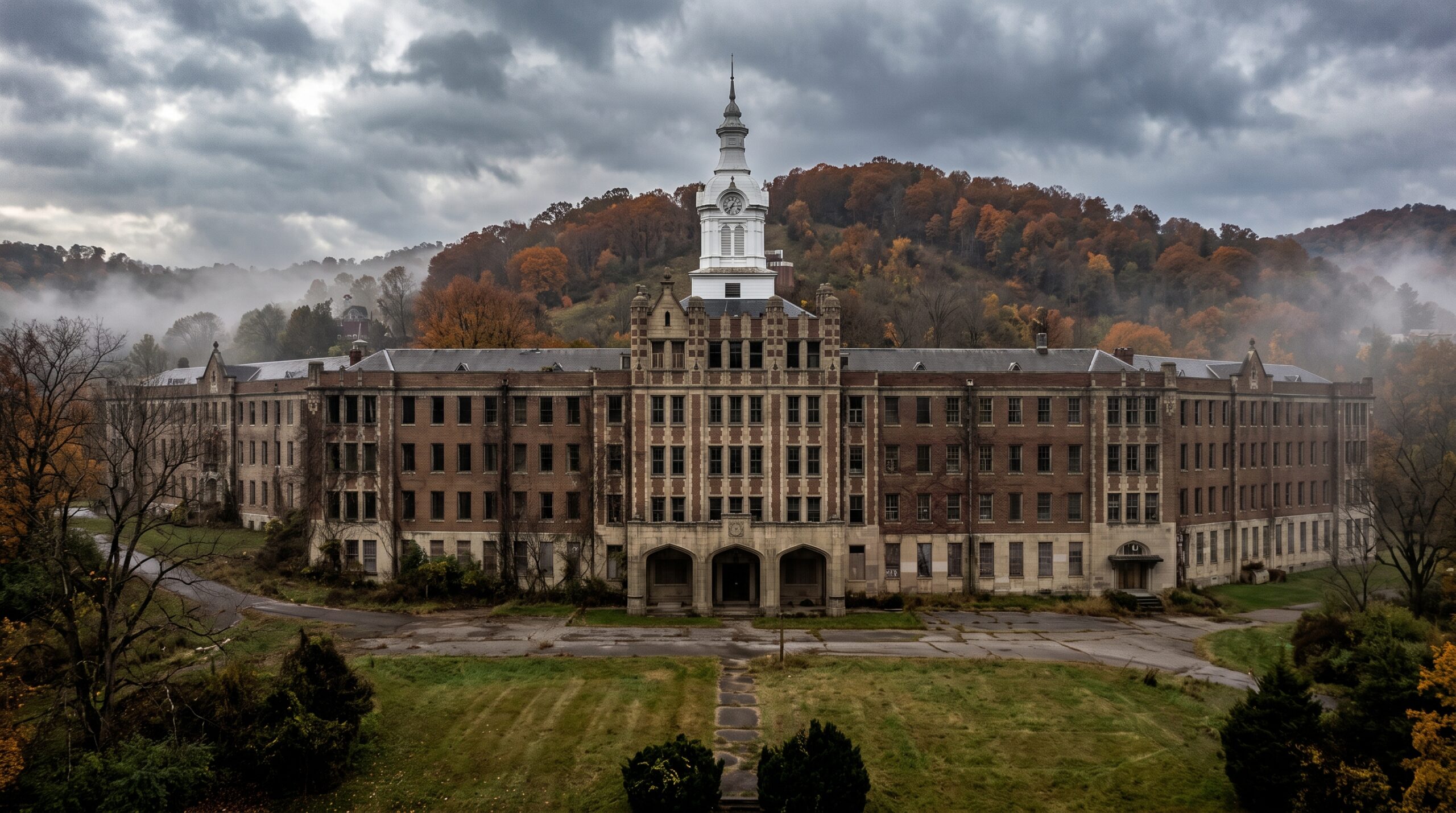
In Weston, West Virginia, stands a massive Victorian-era building whose long corridors, towering windows, and imposing stone walls have inspired stories of ghosts and unexplained encounters for decades. The Trans-Allegheny Lunatic Asylum is one of America’s most recognizable locations associated with haunted history.
But its story reaches far beyond paranormal legends. The institution was built during the nineteenth century to provide care for people experiencing mental illness. Over time, overcrowding, changing medical practices, and the challenges of institutional care transformed its history into a complicated and often troubling chapter in American mental healthcare.
Today, visitors explore the property to learn about its past, examine its remarkable architecture, and hear stories of reported paranormal activity.
What really happened inside these walls—and how did this historic institution become associated with so many ghost stories?
1. A Hospital Built in the Nineteenth Century
Construction of the Trans-Allegheny Lunatic Asylum began in 1858 under architect Richard Andrews. The building followed the Kirkbride Plan, a nineteenth-century approach to psychiatric hospital design that emphasized natural light, ventilation, and an organized arrangement of patient wards.
The hospital began receiving patients in 1864, while construction continued for years afterward. Its enormous stone structure was originally intended to accommodate approximately 250 patients.
The building’s design reflected an era when reformers hoped that carefully planned surroundings could contribute to better mental healthcare. Large windows, spacious wards, and access to fresh air were considered important improvements over earlier institutional conditions.
Yet the institution’s later history would reveal the limits of those ambitions. As patient numbers increased and resources struggled to keep pace, the original vision became increasingly difficult to maintain.
2. The Civil War and an Interrupted Construction
The asylum’s early years coincided with the American Civil War, a conflict that reshaped communities throughout the region.
West Virginia became a separate state in 1863, and the surrounding area experienced the political and social upheaval of the period. The asylum’s construction continued through these turbulent years, and its oldest sections are closely connected to this historical era.
The building’s scale and location make it an imposing reminder of nineteenth-century America. Its unfinished and evolving construction history also contributes to its unusual architectural character.
Modern visitors sometimes interpret the atmosphere of these old sections as unsettling. Historically, however, their significance lies in the challenges of building and operating a major public institution during a period of national conflict.
The Civil War connection adds another layer to the site’s history, even though claims of specific wartime hauntings should be treated as folklore unless independently documented.
3. When the Hospital Became Overcrowded
One of the darkest chapters in the asylum’s history involved the growth of its patient population.
The building was originally designed for approximately 250 people, but by the 1950s, the institution reportedly housed more than 2,400 patients. Such overcrowding placed immense pressure on staff, facilities, and the delivery of care.
Conditions in large psychiatric institutions varied over time, but overcrowding and limited resources could make humane, individualized treatment extremely difficult.
This history is essential to understanding the institution’s reputation. Behind the modern ghost stories were real patients whose lives were shaped by the medical knowledge, social attitudes, and institutional policies of their era.
Their experiences deserve to be remembered with dignity rather than reduced to frightening entertainment.
4. The Troubling History of Psychiatric Treatments
The Trans-Allegheny Lunatic Asylum operated during a period when psychiatric medicine underwent major changes. Treatments that were once considered promising or scientifically justified are now viewed very differently.
Historical psychiatric practices associated with the institution and its era included hydrotherapy, insulin shock therapy, and lobotomy. These treatments differed substantially in purpose, procedure, risks, and historical context.
Some therapies were introduced when effective alternatives were limited. Others became controversial because of their risks and the ethical questions surrounding consent and patient welfare.
The history of psychiatric care is not simply a story of cruelty or medical failure. It also includes efforts to understand mental illness and develop more effective treatments. Nevertheless, examining outdated practices reveals how vulnerable patients could be when medical knowledge and protections were limited.
The asylum’s historic tours discuss medical procedures and the evolution of mental healthcare, offering visitors a way to understand these issues in their historical setting.
5. The Legend of Ghostly Figures in the Corridors
Among the best-known stories associated with the Trans-Allegheny Lunatic Asylum are reports of shadowy figures appearing in hallways and abandoned-looking rooms.
Paranormal enthusiasts have described unusual silhouettes, fleeting movements, and the feeling that someone is standing nearby when no one appears to be present.
These reports have become part of the building’s modern folklore. However, accounts of apparitions are not independently verified evidence that the spirits of former patients remain in the institution.
Large historic buildings can create unusual visual conditions. Low lighting, reflections, deep shadows, and the expectations of visitors may influence how people interpret what they see.
For those interested in paranormal stories, the corridors remain an evocative setting. For historians, the more important task is to preserve the distinction between reported experiences and documented events.
6. Unexplained Sounds and Stories of Haunted Rooms
Another recurring theme in paranormal accounts involves unexplained sounds.
Visitors and investigators have reported hearing footsteps, distant voices, knocks, and other noises in sections of the building. Some interpret these experiences as possible communication from former residents.
Yet sound can travel unpredictably through long corridors, stairwells, and large empty rooms. Wind, building materials, plumbing, and distant activity can all produce noises that are difficult to identify immediately.
Without reliable independent evidence, these reports cannot establish a supernatural explanation.
The building’s physical character nevertheless helps explain why such stories persist. Its extensive interior, historical atmosphere, and quiet spaces encourage visitors to imagine what life might have been like inside the institution many decades ago.
7. The Asylum’s Transformation Into a Haunted Landmark
The institution eventually closed in 1994 after decades of change in mental healthcare and the decline of the large psychiatric hospital model.
Its closure marked the end of an important chapter in the region’s history. The enormous building, however, remained a powerful local landmark.
In later years, the property developed into a destination for historical tours, architectural exploration, and paranormal-themed experiences. Its reputation grew through visitor accounts, ghost-hunting programs, and popular media.
The official site now offers historical tours that explore the building’s architecture, patient life, medical treatments, and broader historical context, alongside separate paranormal experiences.
These tours provide an opportunity to explore the institution’s history while learning how its modern reputation developed.
The building’s continuing appeal comes from this unusual combination: a significant historic structure, a complicated medical past, and stories that invite visitors to consider what may—or may not—remain unexplained.
Is the Trans-Allegheny Lunatic Asylum Really Haunted?
There is no conclusive scientific evidence establishing that the Trans-Allegheny Lunatic Asylum is haunted. Reports of apparitions, unexplained sounds, and unusual sensations are part of its paranormal reputation, but they do not prove the existence of ghosts.
Its documented history provides plenty of material for serious reflection without requiring supernatural explanations. The original architectural vision, the effects of overcrowding, and the evolution of psychiatric treatment all reveal important aspects of American social and medical history.
For paranormal enthusiasts, the reported experiences remain a source of curiosity. For history lovers, the institution offers a chance to understand how mental healthcare developed—and how the experiences of patients were shaped by the limitations of their time.
Perhaps the most significant mystery is how a building originally intended to provide care became known primarily for stories of fear and haunting.
Conclusion: Remembering the People Behind the Walls
The Trans-Allegheny Lunatic Asylum remains one of America’s most fascinating historic institutions. Its imposing architecture, Civil War-era origins, and complicated history have helped establish its reputation as a haunted landmark.
Yet the real story extends far beyond ghost legends. It is a story about changing medical beliefs, institutional challenges, and the people who lived and worked within its walls.
The paranormal accounts may attract visitors, but the historical record offers the deeper lesson: the past should be explored with curiosity, accuracy, and respect for those who experienced it.
Would you visit the Trans-Allegheny Lunatic Asylum to explore its history, or would the ghost stories make you hesitate?
Share your thoughts in the comments and discover more haunted locations with Dark America Stories.
Editorial note: Paranormal claims in this article are presented as folklore or reported experiences, not verified supernatural facts.