The Queen Mary: 7 Dark Secrets Behind the Haunted Ship
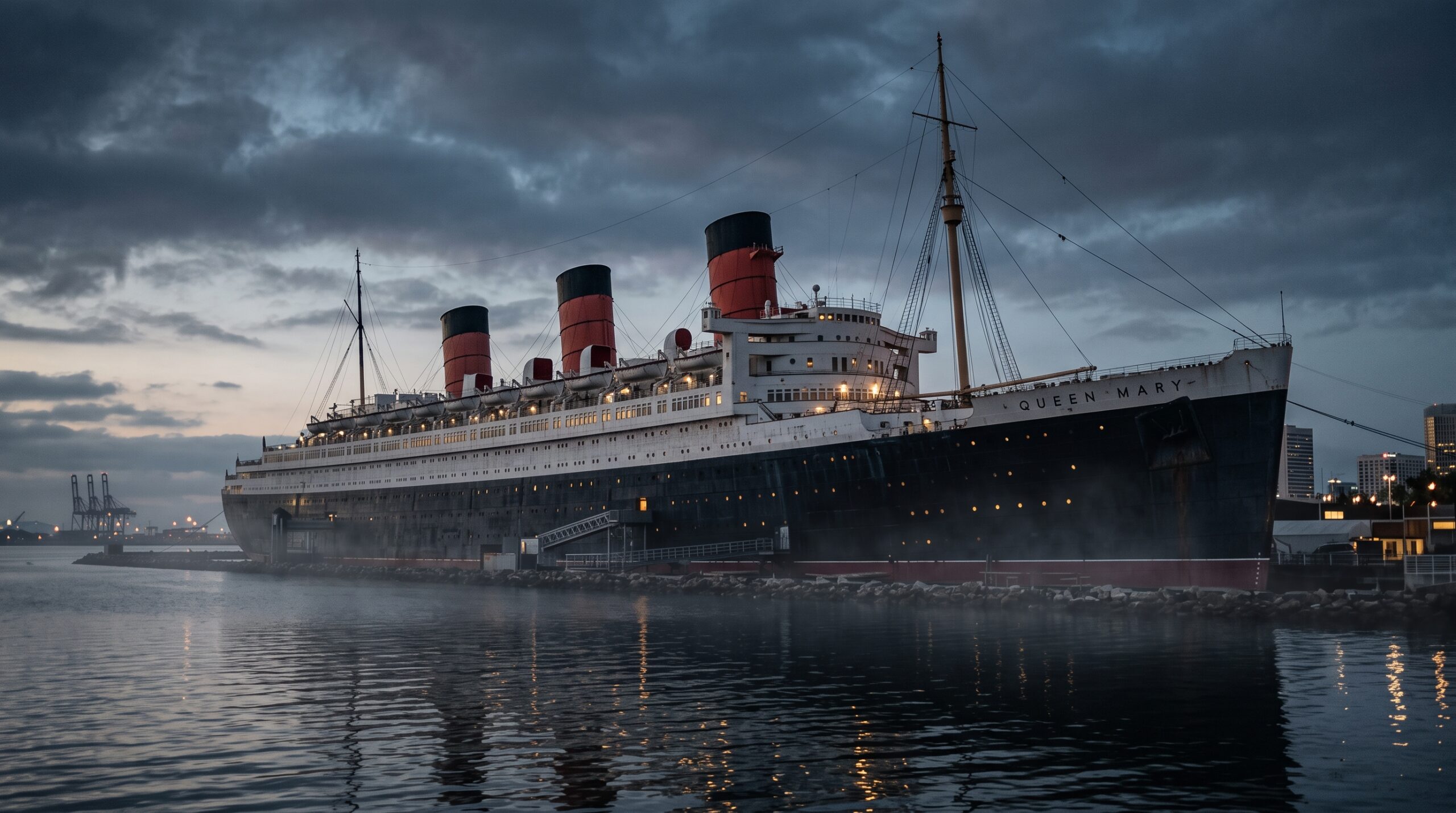
Docked in Long Beach, California, the RMS Queen Mary is one of America’s most recognizable historic ocean liners. Its towering funnels, enormous steel hull, and elegant Art Deco interiors recall an era when crossing the Atlantic by ship was a grand experience.
But behind its polished history lies a darker reputation. Stories of strange footsteps, unexplained sounds, and mysterious encounters have made the Queen Mary a favorite destination for people fascinated by haunted places. Some visitors arrive to explore maritime history, while others hope to experience something they cannot explain.
How did a retired ocean liner become known as one of America’s most famous haunted ships? These seven stories explore its history, its legends, and the difference between documented facts and paranormal folklore.
1. A Luxury Liner Built for the Atlantic
The Queen Mary was built in Scotland for the Cunard Line and entered passenger service in 1936. Designed to carry travelers across the Atlantic Ocean, she represented the engineering ambition and luxury of her time.
Her interiors featured elegant lounges, decorative woodwork, polished metal details, and sophisticated passenger accommodations. The ship carried celebrities, wealthy travelers, families, and ordinary passengers seeking a transatlantic journey.
The Great Depression delayed her development, but the liner eventually became a symbol of ocean travel. Her size and speed helped establish her place among the famous passenger ships of the twentieth century.
2. The Ship’s Wartime Transformation
When World War II began, the Queen Mary’s role changed dramatically. She was converted into a troopship, painted gray, and used to transport Allied military personnel.
The liner could carry thousands of troops on a single voyage. Her speed and size made her valuable to the Allied war effort, and she completed numerous wartime crossings.
Life aboard during this period was very different from the luxury experiences of the 1930s. Crowded sleeping arrangements, strict routines, and the dangers of wartime travel became part of the ship’s story.
The Queen Mary also has a tragic wartime history. In October 1942, while carrying troops, she collided with her escort ship HMS Curacoa in the Atlantic. The Curacoa sank, and hundreds of British sailors lost their lives. The Queen Mary continued under orders because stopping in the dangerous wartime environment could have exposed the troopship to further risk.
This collision is a documented historical tragedy, not a ghost story. It is an important part of understanding the human experiences connected to the ship.
3. Reports of Mysterious Footsteps
Among the stories associated with the Queen Mary are reports of footsteps in quiet corridors and sounds that seem to come from empty rooms.
Some visitors describe hearing movement when nobody appears to be nearby. Others report strange noises in areas that feel isolated from the ship’s public spaces.
Large vessels are complicated structures. Metal walls, ventilation systems, machinery, pipes, and the movement of people can cause sounds to travel in unexpected ways. The ship’s age and enclosed layout can make it especially difficult to identify where a noise originates.
These experiences have become part of the Queen Mary’s folklore, but reports of unexplained footsteps do not establish that anything supernatural is present.
4. The Legends of the Swimming Pool
The Queen Mary’s former swimming pool areas are among the locations frequently mentioned in paranormal stories about the ship. Some accounts describe mysterious figures, unexplained sounds, or the impression that someone has appeared and disappeared in the area.
Over time, these stories have circulated through visitor accounts, ghost tours, and paranormal-themed media. Their details can differ, and not every version has a reliable historical source.
The ship’s old recreational spaces are fascinating even without the supernatural claims. They provide a glimpse into the leisure facilities once enjoyed by passengers traveling across the Atlantic.
Visitors should treat stories about mysterious figures as folklore rather than verified evidence. The historical setting is real; the paranormal explanations remain unproven.
5. The Story of a Mysterious Child
Another popular category of Queen Mary ghost stories involves reports of a childlike figure or unusual activity in parts of the vessel associated with recreation.
Different versions of these tales appear in paranormal discussions, sometimes with conflicting details about the identity of the supposed figure and the circumstances of the encounter.
Such inconsistencies are common in ghost folklore. A story can change as it is repeated, particularly when it becomes part of a tourist attraction or a popular mystery narrative.
There is no conclusive scientific evidence establishing that a ghost child haunts the Queen Mary. Nevertheless, the stories remain part of the ship’s modern reputation and demonstrate how legends can become attached to historic locations.
6. The Dark Corridors and Engine Spaces
The Queen Mary’s scale creates a dramatic setting for mystery. Narrow passageways, steel doors, old machinery, and lower-deck spaces reflect the complex systems required to operate a major ocean liner.
Some paranormal accounts focus on these less familiar areas, describing uneasy feelings or unexplained noises. The ship’s machinery spaces also remind visitors of the demanding work once performed by engineers and crew members.
A ship is never completely silent. Metal can respond to temperature changes, ventilation can produce unfamiliar sounds, and echoes can distort a noise’s apparent direction. Low lighting and unfamiliar surroundings can also affect how people interpret what they hear or see.
The contrast between the vessel’s luxurious public rooms and its industrial interior is one of the most compelling aspects of exploring its history.
7. From Ocean Liner to Historic Attraction
The Queen Mary’s final passenger voyage took place in 1967. After decades of transatlantic service and wartime duty, the ship was permanently retired and brought to Long Beach, California.
It opened to the public as a hotel and visitor attraction in 1971. Since then, the Queen Mary has served as a reminder of the age of great ocean liners, offering visitors a chance to explore its historic spaces and learn about its maritime past.
Its ghost stories have become part of its tourism appeal. However, the ship’s historical importance extends well beyond paranormal entertainment. Its record includes technological ambition, international travel, wartime service, and the lives of the people who worked and traveled aboard her.
Before visiting, check the official Queen Mary website for current tours, opening hours, hotel information, and access restrictions.
Is the Queen Mary Really Haunted?
The Queen Mary has accumulated a large collection of ghost stories, but there is no conclusive scientific evidence proving that the ship is haunted.
People may interpret unusual sounds, shadows, or sensations in different ways. Expectations, low lighting, fatigue, and the unusual acoustics of an old ship can influence perception. Some experiences may remain unexplained to the people who report them without necessarily having a supernatural cause.
The most reliable way to understand the Queen Mary is to separate its documented maritime history from the legends that grew around it. Both have shaped the ship’s public identity, but they are not the same thing.
A Ship Where History Meets Mystery
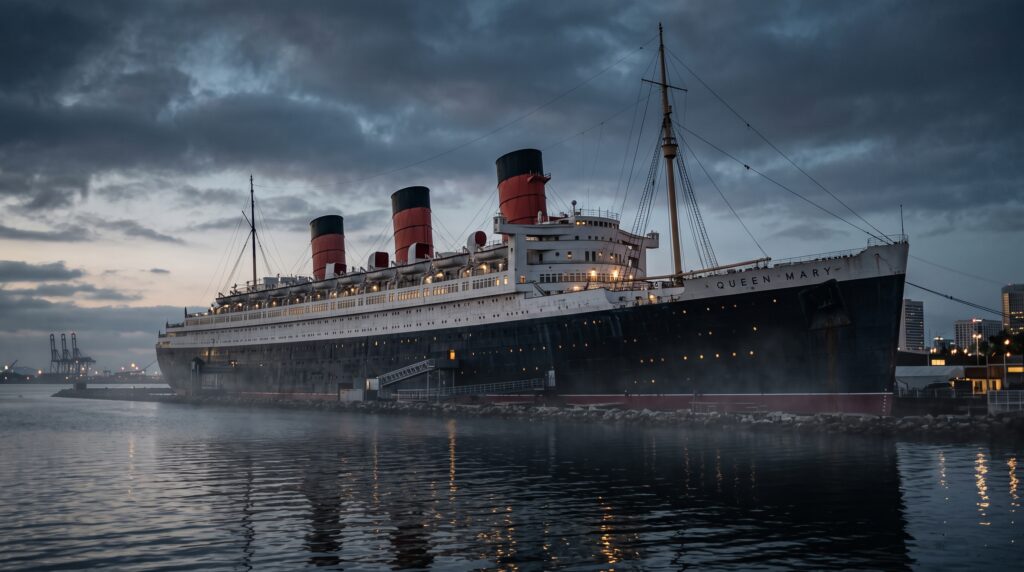
The Queen Mary has survived changing eras of travel, a world war, and the end of the great ocean-liner age. Today, her massive silhouette remains a striking presence on the California waterfront.
Her ghost stories continue to attract curious visitors, but the real historical events connected to the ship are equally compelling. From luxury voyages to dangerous wartime crossings, the Queen Mary carries memories of a world that no longer exists in quite the same way.
Whether you visit for maritime history or mysterious legends, the ship offers a journey into the past. And as you walk through its quiet corridors, it is worth remembering that the most powerful stories aboard the Queen Mary begin with the real people who once called her home.
Frequently Asked Questions
Where is the Queen Mary located?
The Queen Mary is permanently docked in Long Beach, California, United States.
When was the Queen Mary built?
The ocean liner was built in Scotland and entered passenger service in 1936.
Was the Queen Mary used during World War II?
Yes. She was converted into a troopship and transported Allied military personnel during the war.
Why is the Queen Mary considered haunted?
The ship is associated with stories of unexplained footsteps, mysterious figures, and unusual sounds. These are reported experiences and folklore, not scientifically verified paranormal events.
Can visitors explore the Queen Mary?
Yes. The ship operates as a historic visitor attraction and hotel, although available tours and access areas can change. Check the official website before visiting.
Editorial note: This article distinguishes documented historical events from reported paranormal experiences. Ghost stories are presented as folklore, not verified supernatural facts.