The Lizzie Borden House: The Chilling Mystery Behind a Famous American Case
A House With a Dark Past
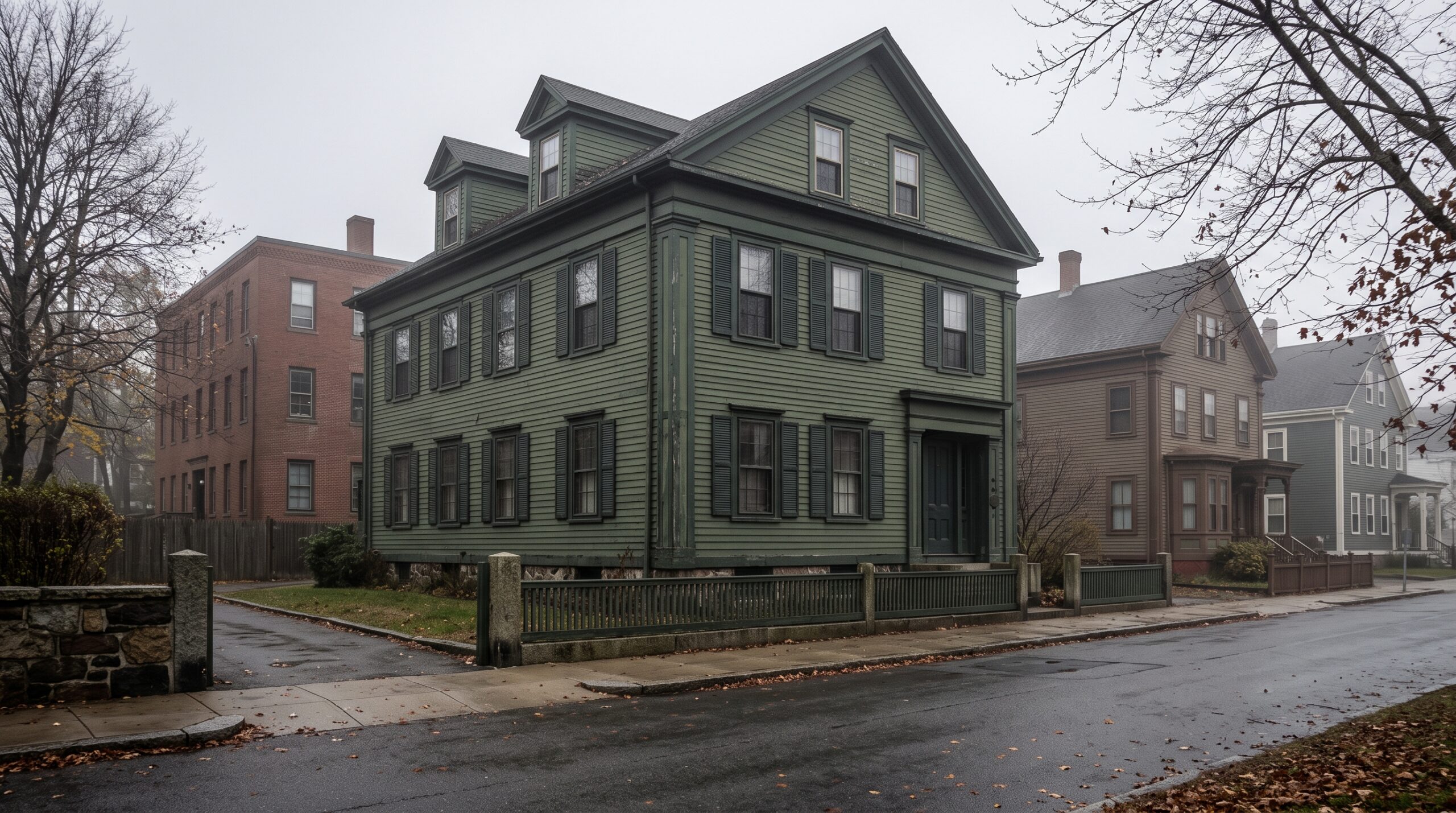
In Fall River, Massachusetts, stands a historic house forever connected to one of America’s most notorious murder cases. Known as the Lizzie Borden House, this Victorian-era residence became famous after Andrew Borden and his second wife, Abby Borden, were found murdered inside their home on August 4, 1892.
The case shocked the nation. Suspicion soon fell on Andrew’s daughter, Lizzie Borden, whose trial attracted enormous public attention. Newspapers covered the investigation, rumors spread throughout the community, and the mystery became one of the most widely discussed criminal cases of the nineteenth century.
Lizzie was ultimately acquitted, but the murders were never conclusively solved in court.
More than a century later, the house continues to attract history enthusiasts, true-crime fans, and paranormal investigators. But what really happened inside the Borden home that summer morning? And why does this case continue to fascinate America?
1. The Borden Family Before the Murders
Andrew Borden was a wealthy businessman in Fall River, a Massachusetts city shaped by the textile industry. Despite his financial success, he lived relatively modestly with his family.
His household included his second wife, Abby Borden, and his adult daughters, Emma and Lizzie, from his first marriage. The family lived in a respectable neighborhood, but accounts of their relationships suggest that tensions existed within the household.
Lizzie and Emma reportedly had a complicated relationship with their stepmother. Questions surrounding family relationships, inheritance, and household disagreements later became subjects of public speculation.
However, not every story about family conflict can be independently established, and popular accounts sometimes exaggerate the tensions to create a more dramatic narrative.
What is certain is that the Borden household appeared ordinary from the outside—until the shocking events of August 4, 1892, transformed it into the center of a national criminal investigation.
2. The Murders of August 4, 1892
On the morning of August 4, Andrew and Abby Borden were killed inside their Fall River home.
Abby was found upstairs, while Andrew was discovered on a sofa in the sitting room. Both had suffered fatal injuries caused by repeated blows to the head with a sharp-edged weapon.
The discovery shocked the local community. Police began investigating the crime, examining the house, questioning family members, and looking for evidence that might identify the killer.
Lizzie was home during the events and soon became a central figure in the investigation. Her statements, her movements that morning, and the circumstances surrounding the deaths received intense scrutiny.
The case was especially difficult because investigators faced the limitations of nineteenth-century forensic science. Modern DNA testing and many other investigative techniques did not exist in their current forms.
As rumors spread, the public became increasingly divided over who could have committed such a brutal crime.
3. Why Did Suspicion Fall on Lizzie Borden?
Lizzie Borden became the primary suspect as investigators examined the events surrounding the murders.
Her accounts of the morning, the family’s circumstances, and questions about possible motives all became important elements of the investigation. Investigators also considered the possibility that the killer was someone familiar with the household.
Newspapers helped turn the case into a national sensation. Reports and commentary often presented conflicting interpretations of Lizzie’s behavior and character, encouraging readers to form their own conclusions.
It is important to distinguish the accusations made during the investigation from proven facts. Suspicion alone does not establish guilt, and the public attention surrounding the case did not mean investigators had definitively identified the killer.
Lizzie maintained her innocence and eventually faced trial. The courtroom proceedings would become one of the most memorable chapters in the case’s history.
4. The Trial That Captivated America
Lizzie Borden’s trial began in June 1893 and attracted widespread attention.
The prosecution attempted to establish that Lizzie had committed the murders, while the defense challenged the evidence and the strength of the accusations. The proceedings examined testimony, the circumstances of the killings, and questions about whether the prosecution had sufficiently demonstrated her guilt.
The trial took place in a period when attitudes toward gender, class, reputation, and respectability could influence public perceptions of criminal suspects.
After deliberation, the jury acquitted Lizzie Borden. She was not convicted of the murders, and no other person was convicted for the killings.
The verdict remains central to the mystery. An acquittal means the prosecution did not secure a conviction; it does not independently establish every detail of what happened.
For historians and true-crime enthusiasts, the trial provides an opportunity to examine how evidence, legal standards, and public opinion interacted in a famous nineteenth-century criminal case.
5. The Weapon and the Missing Answers
One of the enduring questions concerns the weapon used in the murders.
Investigators examined potential weapons and physical evidence, but the case never produced a universally accepted explanation identifying the killer and establishing precisely how the murders were carried out.
The limitations of forensic investigation at the time complicated the process. Investigators could not rely on the advanced laboratory techniques available to modern criminal investigators.
Over the years, writers and researchers have proposed different interpretations of the evidence. Some focus on the circumstances inside the house, while others examine the possibility that investigators overlooked an alternative suspect.
These theories can be intriguing, but none should be presented as a definitive solution without convincing evidence.
The absence of a conclusive resolution is one reason the Lizzie Borden case continues to inspire books, documentaries, and renewed public interest.
6. Life After the Trial
After her acquittal, Lizzie continued living in Fall River. She later moved with her sister Emma to a larger residence known as Maplecroft.
Although she was legally acquitted, the public association between Lizzie and the murders never completely disappeared. The case followed her throughout the remainder of her life, shaping how many people remembered her.
Lizzie died in 1927. Emma died shortly afterward, in 1927 as well. Neither woman lived to see the case fade from public interest.
The story continued through newspaper archives, books, theatrical works, films, and television programs. Each new retelling brought renewed attention to the events and encouraged fresh speculation about the identity of the killer.
The lasting interest in Lizzie’s life demonstrates how a criminal investigation can become part of a country’s cultural history long after the courtroom proceedings have ended.
7. The Lizzie Borden House and Its Haunted Reputation
Today, the former Borden residence is widely associated with ghost stories and paranormal experiences.
Visitors and paranormal enthusiasts have described strange sounds, unexplained sensations, and reports of possible apparitions. Some believe that the tragic events of 1892 left a supernatural presence within the house.
These accounts have helped turn the property into a destination for people interested in both true crime and haunted locations.
However, reports of paranormal activity are personal accounts rather than scientific proof that ghosts exist. The house’s history, atmosphere, and cultural reputation may influence how visitors interpret unusual experiences.
The property’s appeal is not limited to the supernatural. Its historical significance also draws people who want to understand the original crime, the investigation, and the public reaction that followed.
For visitors, the house offers a striking encounter with a place connected to a case that continues to generate questions more than a century later.
Was Lizzie Borden Guilty?
This remains the central question for many people who study the case.
Lizzie Borden was accused of murdering her father and stepmother, but a jury acquitted her in 1893. No alternative suspect was convicted, and the case has never received a universally accepted resolution.
Over time, several theories have emerged concerning the identity of the killer and the possible motive. Some interpretations focus on family relationships, while others consider whether someone outside the immediate household could have been responsible.
The historical record does not justify presenting any one theory as an established answer.
It is also important to remember that Lizzie’s acquittal is a legal fact, while claims about her guilt remain disputed interpretations. The distinction between a documented verdict and speculation is essential when revisiting famous criminal cases.
Perhaps the most enduring aspect of the story is that the evidence and arguments continue to invite debate without providing a universally accepted conclusion.
Conclusion: A Mystery That Refuses to Disappear
The Lizzie Borden House remains one of America’s most recognizable true-crime landmarks. The brutal murders of Andrew and Abby Borden, the sensational trial, and Lizzie’s eventual acquittal created a mystery that has endured across generations.
Although numerous theories have attempted to explain what happened on August 4, 1892, no alternative account has conclusively resolved the case.
Today, the historic house stands at the intersection of American history, criminal investigation, and paranormal folklore. Its reputation reflects not only the tragedy that occurred there but also the enduring human desire to understand unanswered questions.
More than a century later, the most important question remains the same: what truly happened inside the Borden home that morning?
What do you think is the most compelling theory behind the Borden murders? Share your thoughts in the comments and explore more American mysteries with Dark America Stories.
Editorial note: This article distinguishes documented historical events from disputed theories and unverified paranormal claims.